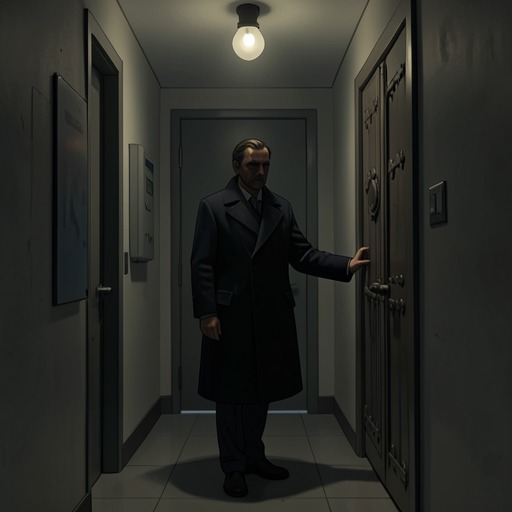
The ABC murder campaign
The A.B.C. MurdersThe A B C murder campaign is a sequence of announced killings framed as a contest with Hercule Poirot. Printed letters taunt him, name places and dates, and turn the murders into a public spectacle. After the deaths of Alice Ascher, Betty Barnard, and Sir Carmichael Clarke, Poirot describes the victims as an old woman, a young girl, and an elderly man, linked by the fact that the same person killed them. The campaign’s apparent pattern promises a puzzle; its publicity, Poirot hopes, may also expose the person behind it.
The letters and their taunts
The first warning is printed on thickish white notepaper, with the envelope printed as well. Addressed to Hercule Poirot, it mocks his confidence in solving mysteries beyond the supposed capacity of the British police and challenges him to crack a difficult case. It directs his attention to Andover on the 21st of the month and signs off as “A B C.” The printed presentation makes the message look deliberate and impersonal, while its direct challenge makes Poirot himself part of the performance.
The next letter treats the Andover case as the opening move in a game. Its writer boasts that the business went “with a swing,” calls it a first victory, and names Bexhill-on-Sea for the 25th. It presents the coming crime as entertainment and claims that the fun is only beginning. Arthur Hastings reacts with alarm at the implication of another attack; Poirot answers that the Andover case was the beginning, not an isolated incident. The letter thus does more than report a place and date: it instructs its recipient to read the first killing as one part of a continuing sequence.
A third message extends the challenge to Churston on the 30th. Again, the writer belittles Poirot, now suggesting that he may be past his prime, and calls the next case an easy one. The letter says that having things entirely its own way is dull, and urges Poirot to do something about it. Hastings immediately reaches for their copy of the A.B.C. railway guide to locate Churston, but Poirot interrupts him to ask when the letter was written and whether it bears a date. His question redirects attention from the named destination to the circumstances of the announcement itself.
A pattern made for public attention
At the gathering of people personally connected with the victims, Poirot sets out what the known deaths have in common. The victims differ in age and circumstance, and the murders occurred in three localities; the one certain link, he says, is that the same person killed them. He argues that the killer must have been present in each place and consequently seen by many people. The announced place names and the variety of victims make the crimes appear as a sequence, while the suspected killer’s repeated presence creates a practical possibility of recognition.
Poirot also distinguishes the apparent pattern from what can actually be inferred about the killer. He calls the person an advanced maniac, yet stresses that appearance and behavior give no indication of such a condition. The killer, he says, has so far covered every trace, leaving the police with only vague indications on which they cannot act. He argues that more certain indications must nevertheless exist. As one test of the sequence’s apparent inevitability, he rejects the idea that the killer arrived in Bexhill at midnight and simply found a young woman whose name began with B conveniently waiting on the beach. The alphabetical arrangement is therefore not, in itself, a complete explanation of how the victims were selected or encountered.
The murder of Sir Carmichael Clarke gives the campaign particular power as news. Clarke had been a well-known throat specialist; after retiring comfortably, he devoted himself to collecting Chinese pottery and porcelain. An inheritance from an elderly uncle later enabled him to build a major collection of Chinese art. He was married, had no children, and lived in a house near the Devon coast, coming to London only on occasions such as important sales. After Betty Barnard’s death, his killing promised an exceptional newspaper sensation, especially in August, when the papers were short of other subjects.
Publicity as a risk
Poirot sees publicity as both a consequence of the sequence and a possible means of undoing it. He observes that the whole country will now be looking for “A B C,” because the case has become too conspicuous for private efforts alone to command attention. Hastings points out the danger in this: the killer wants that attention. Poirot agrees, but proposes that success and public notice may encourage carelessness. His hope is that the author of the campaign will become intoxicated with apparent cleverness and make a mistake.
The campaign’s taunts and advance place-names thus serve two purposes. They make the murders legible as a repeated challenge to Poirot, while directing newspapers and the public toward the campaign’s signature. Yet the same display that makes the pattern memorable also raises the possibility that its creator will overreach. In this evidence, the campaign remains unresolved: its letters promise further crimes, its sequence invites interpretation, and Poirot’s counter-strategy is to treat the killer’s appetite for recognition as a vulnerability.